
Recovering from Toe Surgery: What Patients Should Expect
By Patti Bath, MBA, MSN, RN, NI-BC
Toe surgeries help fix painful deformities, repair joint damage, and restore function. While every patient’s toe surgery recovery is unique, understanding the healing process can make recovery easier.
Common types of toe surgeries and expected recovery timelines
The most common types of toe surgeries are bunionectomy, hammertoe correction, and toe joint fusions. A bunionectomy is the most common, making up nearly half of all toe surgeries. The bunion, also known as hallux valgus, is a bony bump at the base of the big toe that is first shaved off. Then the bones where the big toe and first metatarsal meet are reset, returning them to the proper alignment.
Hammertoe correction removes or fuses middle interphalangeal toe joints that have become stiff or rigid due to a prolonged imbalance of tendons and ligaments. The tight tendons that caused the hammertoe may also be released.
Initial recovery for a bunionectomy or hammertoe correction is usually 6-8 weeks, although you can be fairly mobile with the right combination of rest and protective footwear.
Arthrodesis, or toe joint fusion, is a surgical procedure done to permanently repair the bones in a damaged or arthritic toe joint using pins or screws. This sets the affected toe back into a straight, stable position. Depending on the toe and hardware used, weight-bearing and mobility may be limited for the first 6-8 weeks and full recovery may take 3-6 months.
Managing swelling, pressure, and mobility during healing
Your healthcare provider will tell you what to expect after toe surgery based on your specific procedure, but there are commonalities for managing swelling, pressure, and mobility during the immediate post-op period.
For the first 1-2 weeks, it’s important to rest and keep your foot elevated as much as possible. While resting, apply ice packs for 10-20 minutes every hour. This will help decrease swelling and relieve pressure on the surgical site.
Mobility will be prescribed by your surgeon and will range from mobility as tolerated to non-weight-bearing. It’s important to follow those directions closely to prevent re-injury. As mobility advances, remember to continue resting and icing, and to wear protective shoes.
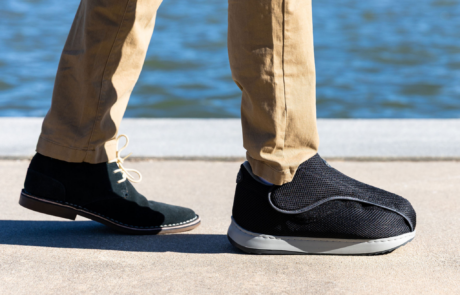
AllRound Shoe™
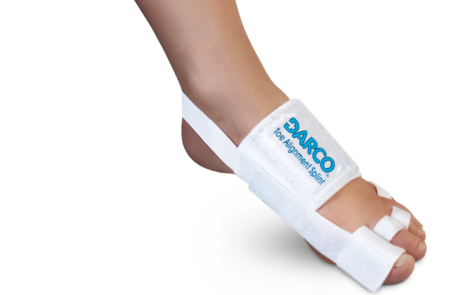
Toe Alignment Splint
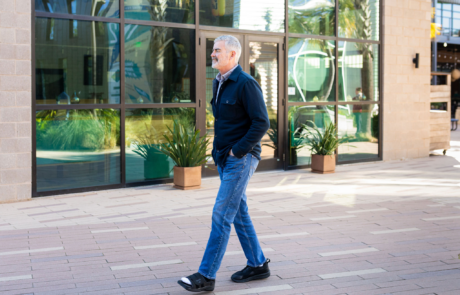
MedSurg™ Post-Op Shoe
Why proper footwear is important after toe procedures
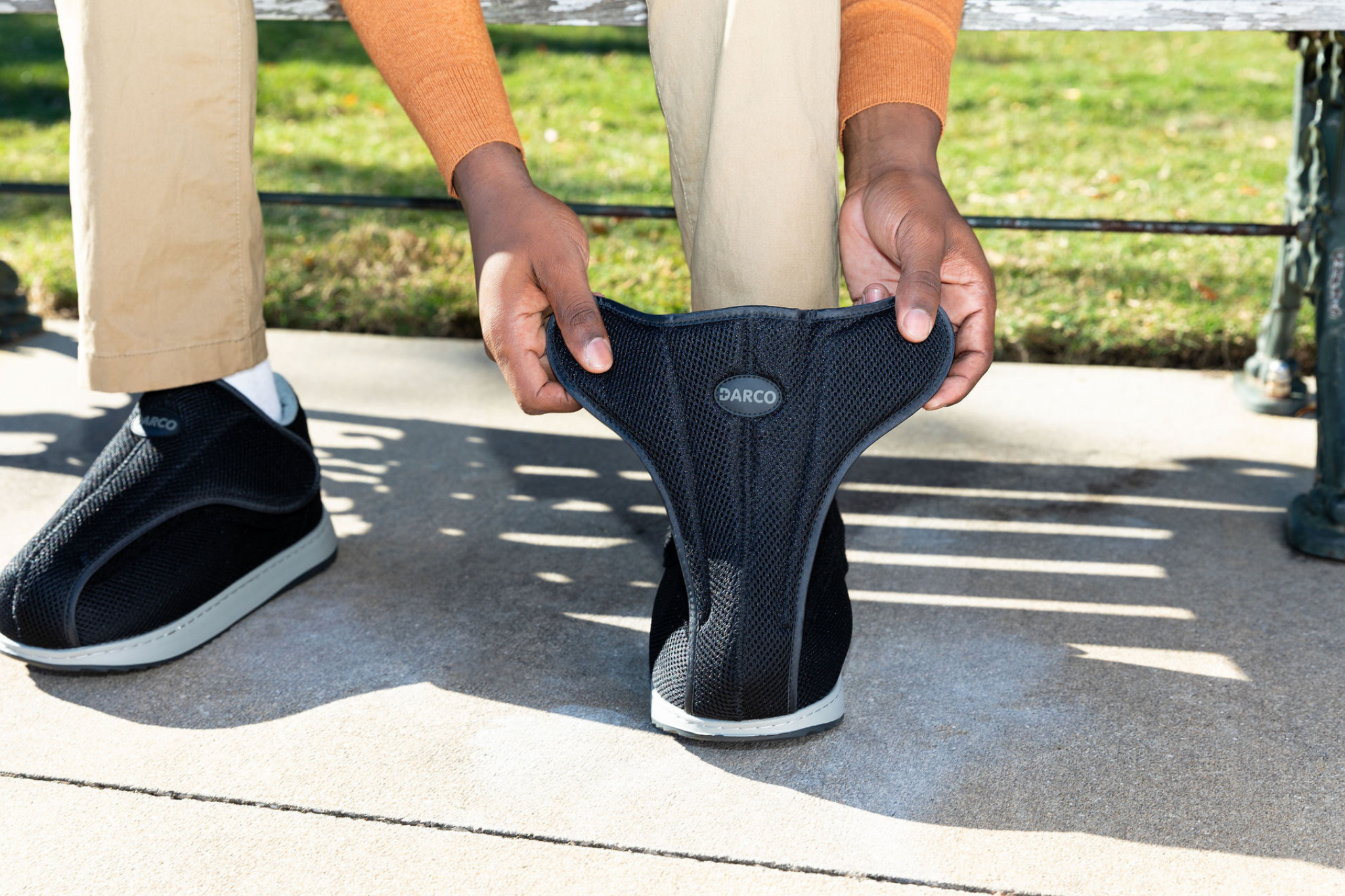
The right footwear after toe surgery protects the surgical site, reduces pain, and makes mobilization safe. Stiff-soled shoes like DARCO International’s MedSurg™ Post-Op Shoe and AllRound™ Shoe provide support and protection while accommodating bulky post-op dressings. These may be combined with DARCO International’s GTS™ Great Toe Splint or TAS™ Toe Alignment Splint to help maintain alignment after the procedure.
Warning signs patients should monitor during recovery
During recovery, it’s important to monitor for signs of infection. This includes fever, increased redness, swelling, heat, and drainage at the surgical site. Numbness, tingling, and unrelieved pain can also be warning signs. If you notice any of these, call your healthcare provider immediately.
Healing after toe surgery can take time. Knowing what to expect, along with the support of your care team, will help you recover and return to daily activities.
*The information provided is for educational purposes only and should not be considered medical advice. Please consult your healthcare provider for guidance specific to your individual health needs.